
What's so "post" about postliberalism?
Some quick thoughts with the help of Charles Taylor

Postliberalism has surged into the spotlight of American right-wing discourse in the last few years, drawing attention for its audacious claims, its unexpected rejection of traditional conservative narratives about the American founding, and its contentious political affiliations. This new movement has stirred both excitement and consternation within political circles, it has promised to shake the very foundations of American political debate, it has fostered new and until recently unthinkable debates within the American right. Calling this movement postliberal seems, however, to be a misnomer.
After all, what does “post” mean in postliberalism?
We are dealing, of course, with a rather complex prefix. At its simplest, it denotes a temporal marker, signalling what comes after liberalism, akin to its usage in terms like “postwar” or “post-industrial”. This sense of “post” certainly captures a significant aspect of the whole postliberal movement, which emphasizes the inherent and necessary failure of liberalism. One of the central theses of Patrick Deneen’s Why Liberalism Failed, the book most directly responsible for putting the postliberals on the political map, is that liberalism failed because it succeeded. That is, it is precisely the liberal ethos, its constant drive for autonomy and liberation, that leads to its inevitable collapse, as it corrodes all communal bonds and forms of societal cohesion. Liberalism, Deneen argues, digs its own grave; and postliberalism can be seen as a mere placeholder for what is bound to come next.
Such fatalist understanding of liberalism underscores, moreover, another sense of “post”, which we can describe as “meta”, closer to the way it is used in words such as “postmodernism”. In this case, postliberalism works as a meta-analysis and critique of liberalism, an almost transcendental analysis of its own structure, the historical and philosophical conditions that made it possible, and its underlying and oft-unnoticed assumptions. Such is the form of postliberalism usually found in the (genealogical) work of John Milbank.
Finally, one can see “post” as signifying a more critical stance towards whatever it is qualifying, as in “post-structuralism”. In this sense, postliberalism works as a critical lens towards which to consider liberalism that brings within themselves a transformative impulse, a movement towards something qualitatively different from liberalism. This transformative aspect of “post” suggests a departure from the ideological confines of liberalism towards new and alternative modes of societal organization; something closer to what Deneen attempted to do in his later book, Regime Change.
The exact meaning of “post” in postliberalism is, of course, a product of the interplay of all these disparate though connected senses. But underlying them all is a more primitive fact that is often overlooked, if not completely ignored, by so-called postliberals: that the “designation of the prefix ‘post’ at the very least implies that we must not forget that to which the ‘post’ refers”[1]. That is, “post” requires a forward-looking, creative engagement with that which it qualifies that, at once, recognizes its virtues and its limitations. As John Milbank, himself a postliberal, puts it: “‘post’ is different from ‘pre’ and implies not that liberalism is all bad, but that it has inherent limits and problems”[2].
The oversight of this fundamental fact has been, however, prevalent among the new and emerging wave of (mainly American) postliberal. A prime illustration of this can be found in DC Schindler’s Freedom from Reality and The Politics of the Real. Through these two books, Schindler scarcely finds anything commendable in liberalism. In the former, instead, he poses that the liberal understanding of freedom is necessarily “diabolical” (appealing to the roots of the word as meaning that which “drives apart” and subverts) which leads to the sweeping claim, in the latter, that liberalism is fundamentally an anti-Christian theology.
It is not up to this short piece to discuss the merits – or the intelligibility – of such assertions. Rather, I pose a simple question: can one build a genuine postliberalism on such premises? If liberalism is deemed to be an inherently anti-Christian theology, and if one aims to formulate a political doctrine rooted in an authentically Christian one – as postliberals do – the only logical recourse available seems to be to embrace “illiberalism” or “pre-liberalism”.
Rather than a wholesale rejection of liberalism, then, postliberals ought to seek creative engagement with it, pointing its strengths and aiming to transcend its limitations. But this endeavour becomes unattainable if liberalism is unequivocally negative.
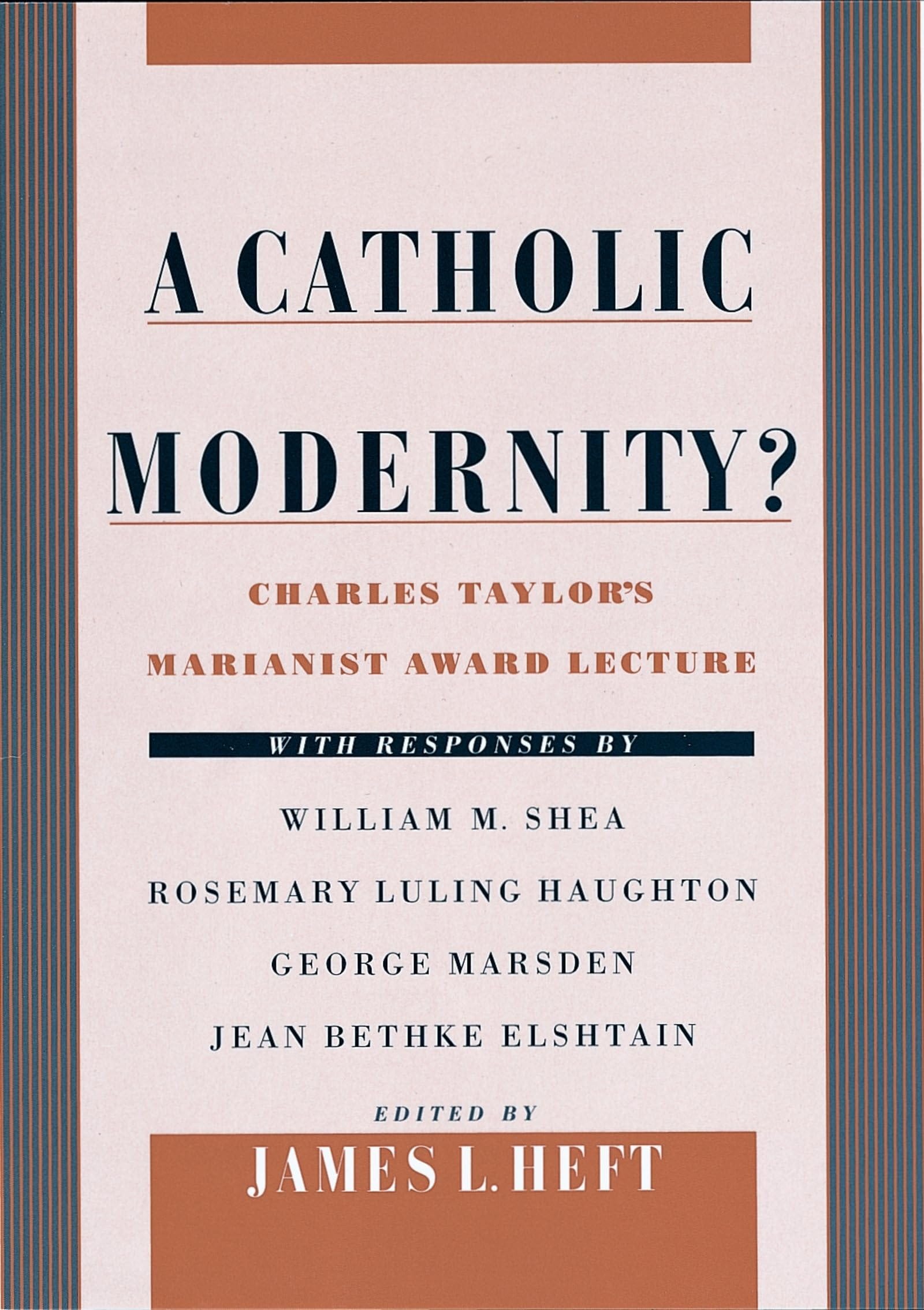
A better example for postliberals on this score can be found in the work of Charles Taylor. In his A Catholic Modernity?, for instance, Taylor unabashedly states that “modern culture, in breaking with the structures and beliefs of Christendom, also carried certain facets of Christian life further than they ever were taken or could have been taken within Christendom”. Rather than mere dismissal, Taylor recognizes a profound paradox in modern liberalism. While it marked an undeniable extension of gospel-inspired values and actions – solidarity, benevolence, dignity, equality, universal human rights – into the fabric of contemporary society, its metaphysics and moral culture cannot fully ground these goods. Taylor thus drives through a nuanced argument that tries to balance the concrete goods brought by liberalism and also its shortcomings. This requires, on his part, humility, a letting go of any triumphalist dreams, a recognition that, in actuality, it took a rupture from the confines of institutional Christianity for “the impulse of solidarity to transcend the frontier of Christendom itself”[3].
According to Taylor, “in modern, secularist culture there are mingled together both authentic developments of the gospel, of an incarnational mode of life, and also a closing off to God that negates the gospel”[4]. Working out these authentic developments while accounting for its distortions is a far more promissory note towards the development of a genuine postliberalism.
In the end, for postliberalism to truly earn its prefix, it must transcend the temptation to regress into a reactionary “pre-liberalism” or “illiberalism.”
[1] Michener, R. T. (2013). Postliberal Theology: A guide for the perplexed. Bloomsbury, p. 1.
[2] Milbank, J. (2012). Blue Labour, One-Nation Labour and Postliberalism: A Christian Socialist Reading. Centre of Theology and Philosophy - University of Nottingham
[3] Taylor, C. (1999). A Catholic modernity?: Charles Taylor’s Marianist Award lecture, with responses by William M. Shea, Rosemary Luling Haughton, George Marsden, and Jean Bethke Elshtain. New York: Oxford University Press, p. 26.
[4] Ibid., p. 16.
Great article Joao! I'm elated you're writing in a language I understand.
I would highly recommend Modernity's Alternative by Rocco Buttiglione (pusblished by Newpolity press). Newpolity, the think tank Schindler is highly involved with, usually gets falsely accused of being constantly backwards looking. However, I see two things from them.
1. There is not an outright rejection of all of Liberalism, in Andrew Willard Jones' newest book "The Church Against The State" he readily admits that his formula for subsidiarity would lead to a sort of American constitution. They rely more on classical philosophy than liberalism and that makes them postliberal, and they do accuse many of the founders of liberalism of having diabolical assumptions, but in practice, they do have some ok things to say about liberalism.
2. Especially since they have engaged with Rocco, they have indeed been looking forward. They had some tendency for nostalgia in the early days, but there has even been some discussion of the place of global markets in a post-war order.
I think that the classic political philosophy is the best framework moving forward (as you mentioned with Taylor). We learned some good things from liberalism. For example, the total abolition of slavery (at least on paper) has been pretty good, but I think going forward you have to look to a less ideological time, and as Ian Mcgilchrist has taught us, that will likely be in the past.
Also, side question. What's your opinion on liberalism and Christianity? Many popes have explicitly comdemned it.